Elemental analysis
Analytical process for determining elemental composition of materials.

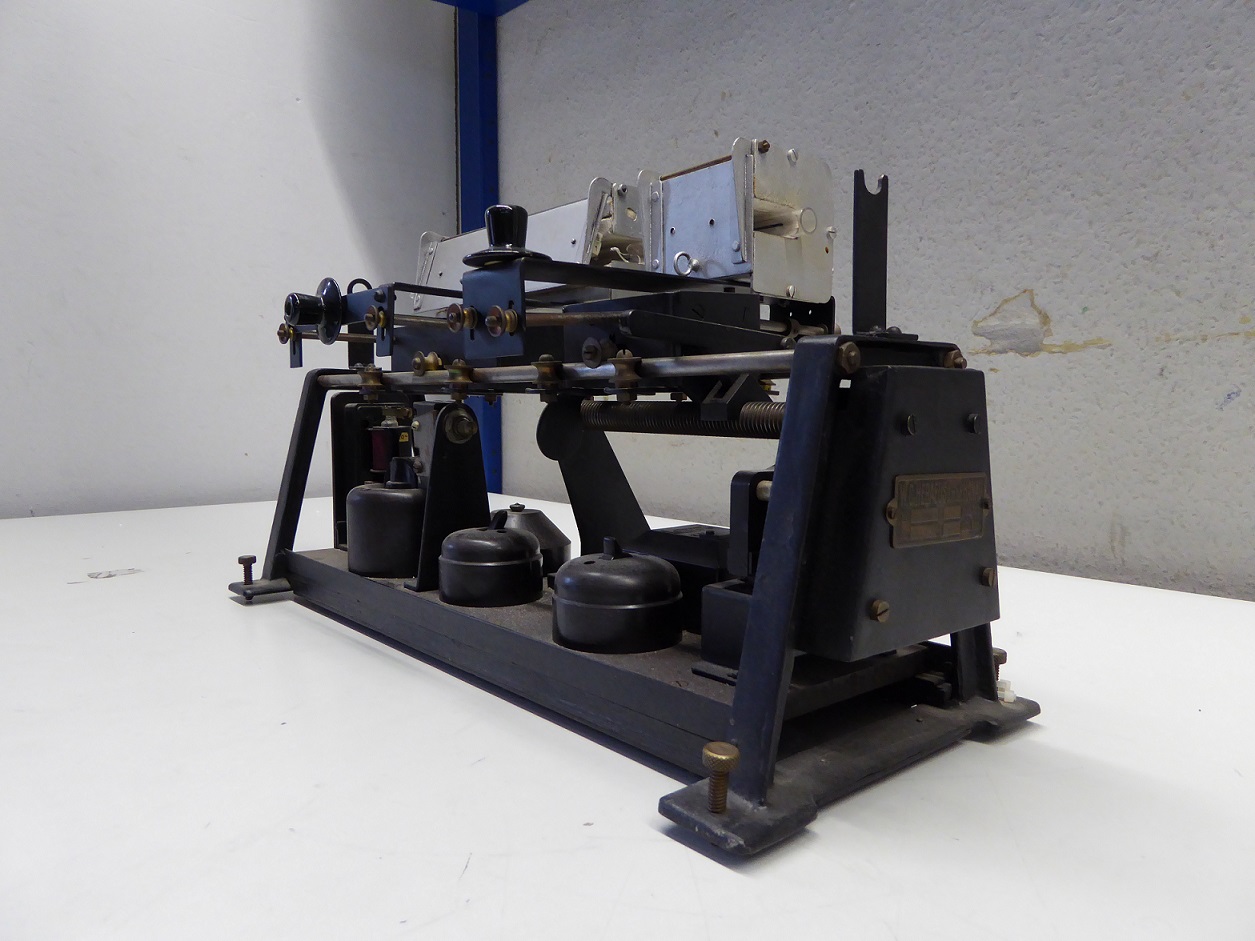
MaRufaru82 · CC BY-SA 4.0
Elemental analysis is a process within analytical chemistry where a sample of material such as soil, waste, drinking water, bodily fluids, minerals, or chemical compounds is analyzed for its elemental and sometimes isotopic composition. It can be qualitative, determining what elements are present, or quantitative, determining how much of each element is present.
- field
- Analytical chemistry
- known_for
- Determining elemental and isotopic composition of materials; CHNX analysis for organic compounds
Lore & Background
Antoine Lavoisier is regarded as the inventor of elemental analysis as a quantitative, experimental tool to assess the chemical composition of a compound. At the time, elemental analysis was based on the gravimetric determination of specific absorbent materials before and after selective adsorption of the combustion gases. Today fully automated systems based on thermal conductivity or infrared spectroscopy detection of the combustion gases, or other spectroscopic methods are used. For organic chemists, elemental analysis or 'EA' almost always refers to CHNX analysis—the determination of the mass fractions of carbon, hydrogen, nitrogen, and heteroatoms (X) such as halogens and sulfur. The most common form, CHNS analysis, is accomplished by combustion analysis. Modern elemental analyzers are also capable of simultaneous determination of sulfur along with CHN in the same measurement run. Quantitative analysis determines the mass of each element or compound present, using methods such as gravimetry, optical atomic spectroscopy, and neutron activation analysis. Qualitative analysis uses methods like inductively coupled plasma mass spectrometry, X-ray fluorescence, and chemical methods such as the sodium fusion test and Schöniger oxidation.
Reader's Guide
Elemental analysis remains a foundational technique in analytical chemistry, providing both qualitative and quantitative data about the elemental composition of a wide variety of samples. Its significance lies in its ability to help determine the structure of unknown compounds and to ascertain the structure and purity of synthesized compounds. Although spectroscopic techniques such as NMR and mass spectrometry have largely replaced elemental analysis as the primary method for structural determination in organic chemistry, elemental analysis still gives very useful complementary information. The accepted deviation of elemental analysis results from the calculated is 0.3%, making it a reliable tool for confirming compound identity and purity. Its legacy includes the development of automated systems using thermal conductivity or infrared spectroscopy, and its continued use in fields ranging from environmental testing to pharmaceutical quality control.
Did You Know?
- Antoine Lavoisier is regarded as the inventor of elemental analysis as a quantitative, experimental tool.
- The most common form of elemental analysis, CHNS analysis, is accomplished by combustion analysis.
- Modern elemental analyzers can simultaneously determine sulfur along with CHN in the same measurement run.
- The accepted deviation of elemental analysis results from the calculated is 0.3%.
From Lavoisier's Scales to Automated Spectrometers
Antoine Lavoisier is widely credited with establishing elemental analysis as a rigorous, quantitative experimental discipline for probing the chemical makeup of compounds. In his era, the technique relied on careful gravimetric measurements—weighing specific absorbent materials before and after they selectively captured combustion gases released from a sample. This painstaking approach laid the groundwork for what would become a cornerstone of analytical chemistry, the branch of science dedicated to deciphering the chemical nature of the world around us. Over the centuries, the field has undergone a dramatic transformation. Where Lavoisier's predecessors depended on manual weighing and careful observation, modern laboratories now employ fully automated systems that detect combustion gases through thermal conductivity or infrared spectroscopy, or alternatively rely on other spectroscopic methods entirely. The underlying goal remains unchanged: to reveal which elements are present in a material—whether that material is a soil sample, a mineral, a bodily fluid, a chemical compound, or even drinking water—and to quantify their proportions with precision.
CHNX Analysis: The Organic Chemist's Workhorse
In the world of organic chemistry, the abbreviation EA carries a very specific meaning: CHNX analysis, the determination of mass fractions for carbon, hydrogen, nitrogen, and heteroatoms such as halogens and sulfur within a sample. This information has long been indispensable for two critical tasks—helping to elucidate the structure of an unknown compound and confirming both the structure and purity of a newly synthesized one. The most common variant, CHNS analysis, is carried out through combustion analysis, and modern elemental analyzers have advanced to the point where sulfur can be determined simultaneously alongside carbon, hydrogen, and nitrogen in a single measurement run. While the landscape of structural elucidation has shifted dramatically—with NMR spectroscopy (both proton and carbon-13), mass spectrometry, and chromatographic procedures now serving as the primary tools—CHNX analysis has not been rendered obsolete. Rather, it continues to provide valuable complementary data that reinforces and cross-checks the conclusions drawn from these newer techniques.
Quantitative Techniques: Weighing, Light, and Neutrons
When the goal is to determine exactly how much of each element or compound is present in a sample, analysts turn to a toolkit of quantitative methods. Gravimetry represents the most classical approach: the sample is dissolved, the element of interest is either precipitated so its mass can be measured directly, or volatilized so that the mass loss can be recorded. Optical atomic spectroscopy offers a different window into the atom, probing its outer electronic structure through techniques such as flame atomic absorption, graphite furnace atomic absorption, and inductively coupled plasma atomic emission spectroscopy. At the other end of the spectrum sits neutron activation analysis, a far more exotic procedure in which a sample matrix is activated through neutron capture. The resulting radioactive target nuclei begin to decay, emitting gamma rays at specific energies that serve as fingerprints for the radioisotopes present. The concentration of each analyte is then established by comparing the sample's signal against an irradiated standard with known concentrations.
Identifying Elements and Interpreting the Numbers
Qualitative elemental analysis answers a simpler but equally vital question: which elements are actually present in a given sample? The methods available span a wide range of physical and chemical principles. Mass spectrometric atomic spectroscopy, exemplified by inductively coupled plasma mass spectrometry, probes the mass of atoms directly. Other spectroscopic approaches—X-ray fluorescence, particle-induced X-ray emission, X-ray photoelectron spectroscopy, and Auger electron spectroscopy—investigate the inner electronic structure of atoms. For those who prefer wet chemistry, classical methods such as the sodium fusion test and Schöniger oxidation remain in the toolkit. Once the data are gathered, the final step is interpretation: analysts determine the ratio of elements within the sample and work out a chemical formula that fits those results. This process is crucial for verifying that a submitted sample is indeed the desired compound and for confirming its purity. The accepted deviation between measured and calculated elemental analysis results is a tight 0.3 percent.
Gallery


Frequently Asked Questions
Who is Elemental analysis?
Elemental analysis is a foundational process in analytical chemistry that takes a sample—soil, drinking water, bodily fluid, mineral, or synthetic compound—and breaks down what elements and sometimes isotopes it contains. It operates in two modes: qualitative, identifying which elements are present, and quantitative, measuring exactly how much of each one is there.
What are Elemental analysis's powers or role?
Its core function is to determine the full elemental and isotopic composition of a given material. For organic compounds it is especially well known for CHNX analysis, a combustion-based technique that quantifies carbon, hydrogen, nitrogen, and oxygen content in a single run.
How does Elemental analysis's story end?
The process wraps up by delivering a definitive compositional report to the chemist: a list of elements present and, in quantitative mode, their precise mass or molar proportions. That final breakdown is the deliverable that closes out the analytical workflow.
Why is Elemental analysis important?
It is the go-to verification step in pharmaceutical quality control, environmental monitoring of water and waste streams, and the identification of unknown minerals or synthesized compounds. Without it, researchers would lack a reliable, element-level confirmation of what a substance is actually made of.
What is Elemental analysis's signature technique?
Its most recognized method is CHNX analysis, in which an organic sample is combusted and the resulting gases are measured to determine carbon, hydrogen, nitrogen, and oxygen percentages. This single procedure is the standard first check when a chemist needs to confirm the elemental makeup of a newly synthesized molecule.
More in Chemical Analysis And Spectroscopy 1-18
Spotted an error? Know more?
This is a living reference — every entry is fact-audited, and reader corrections feed straight into our audit queue. Suggest an edit · See this site's audit record