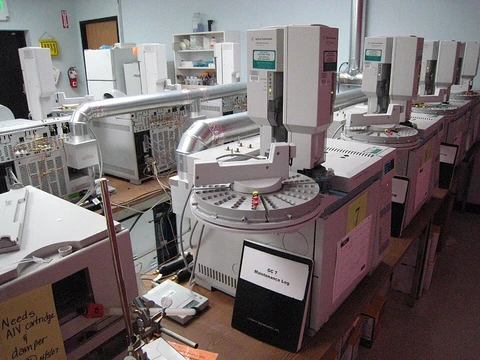
Chromatography
A laboratory technique for separating mixtures into their components.

Mattia Luigi Nappi · CC BY-SA 3.0
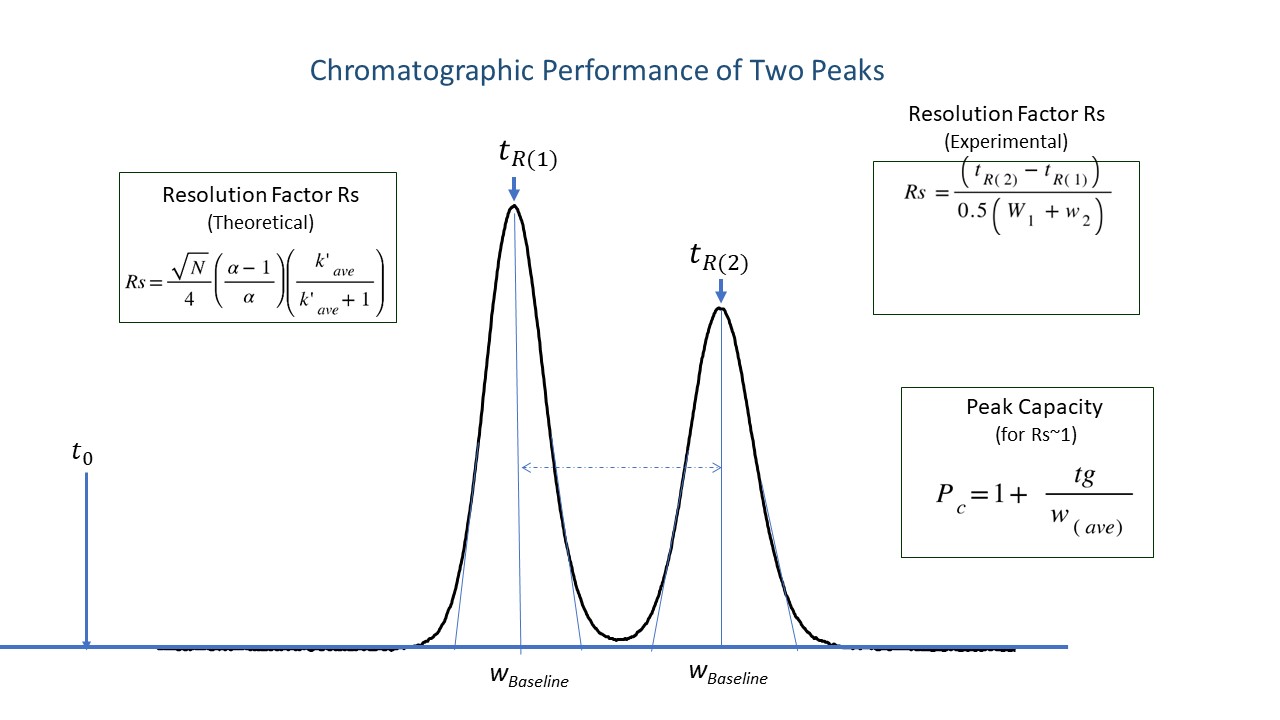
Chromatography is a laboratory technique for the separation of a mixture into its components, based on differential partitioning between a mobile phase and a stationary phase. It was developed by botanist Mikhail Tsvet in the early 20th century, primarily for separating plant pigments, and later advanced substantially by Archer John Porter Martin and Richard Laurence Millington Synge in the 1940s. Chromatography may be preparative (for purification) or analytical (for measuring proportions of analytes), and its principles have led to numerous methods including paper chromatography, gas chromatography, and high-performance liquid chromatography.
- field
- Chemical analysis
- known_for
- Separation of mixtures into components via differential retention on a stationary phase
- key_contributors
- Archer John Porter Martin and Richard Laurence Millington Synge (1940s)
Lore & Background
He coined the term chromatography, derived from Greek words for 'color' and 'to write', after separating plant pigments such as chlorophyll, carotenes, and xanthophylls into bands of different colors. The technique was initially used for biological pigments. They established the principles and basic techniques of partition chromatography, encouraging the rapid development of paper chromatography, gas chromatography, and what would become known as high-performance liquid chromatography. Since then, technology has advanced rapidly. Researchers found that the main principles of Tsvet's chromatography could be applied in many different ways, resulting in various chromatographic methods. Advances continue to improve technical performance, allowing the separation of increasingly similar molecules.
Reader's Guide
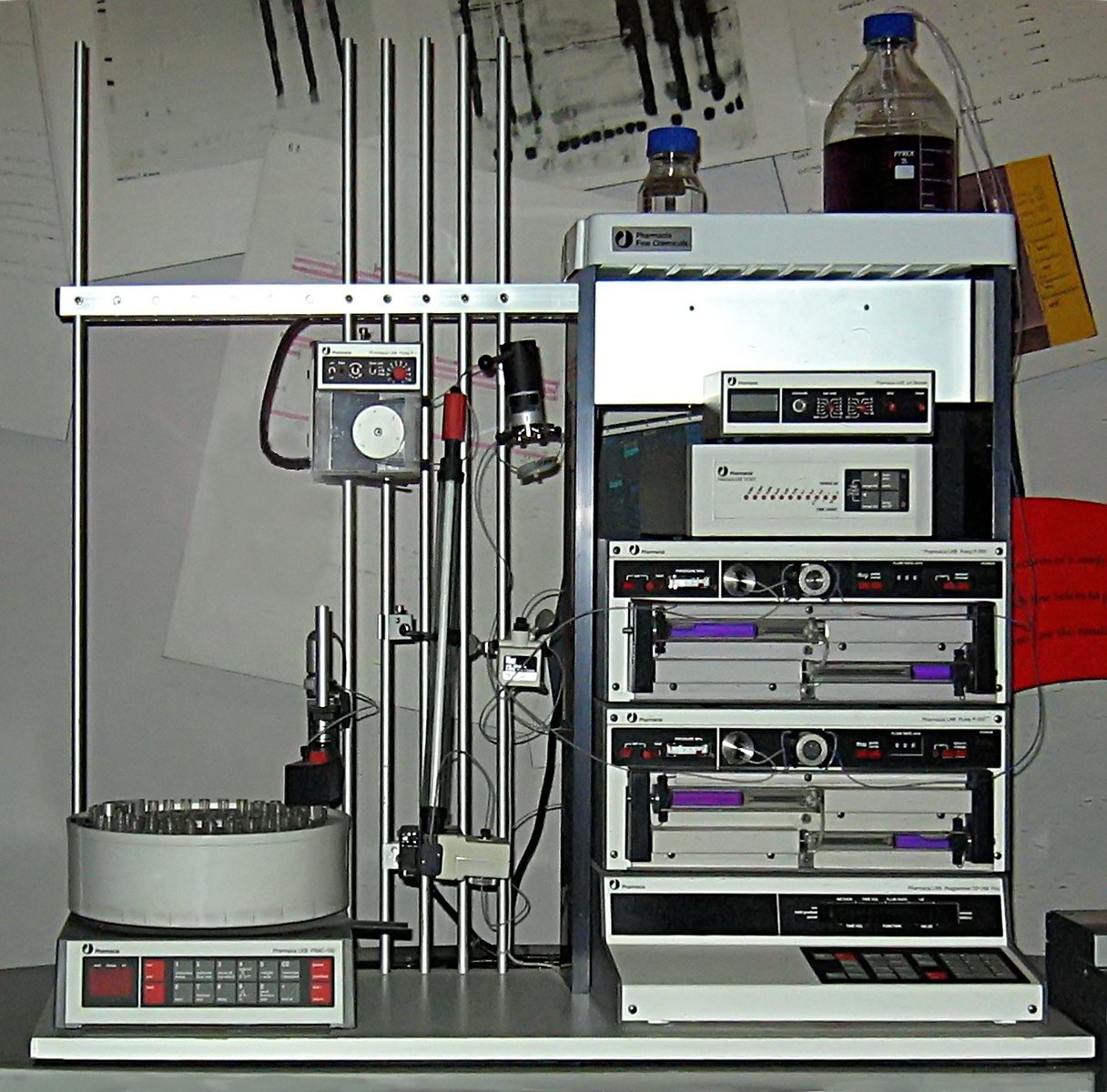
Chromatography is a foundational technique in chemical analysis, enabling the separation of complex mixtures into individual components. Its significance lies in its versatility: it can be used for both preparative purposes (purifying substances for later use) and analytical purposes (determining the presence or concentration of analytes). The method relies on the differential partitioning of components between a mobile phase (gas or liquid) and a stationary phase, with retention times varying based on interactions with the stationary phase. The work of Martin and Synge in the mid-20th century established the theoretical basis for partition chromatography, leading to a proliferation of techniques such as paper chromatography, gas chromatography, and high-performance liquid chromatography. These methods have become essential in fields ranging from pharmaceuticals to environmental testing. Clark Still improved separation speed and efficiency. Modern chromatography systems often include automated detectors and fraction collectors, and advances continue to allow separation of increasingly similar molecules, making chromatography a cornerstone of modern analytical chemistry.
Did You Know?
- The term 'chromatography' is derived from Greek words meaning 'color' and 'to write', inspired by the separation of colored plant pigments.
The Core Mission: Identifying and Quantifying the Invisible
Analytical chemistry sits at the heart of chemical science with a deceptively simple mandate: figure out what something is made of and how much of each component is present. Whether the sample is a solid, a liquid solution, or a gas, the discipline develops methods to identify unknown compounds hidden within complex mixtures and to express their quantities in meaningful units such as concentration, mass percentage, mole fraction, or partial pressure. Its toolkit spans a wide spectrum, from time-honored classical approaches like titration and gravimetric weighing to cutting-edge instrumental methods including spectroscopy, chromatography, mass spectrometry, and electrochemical sensing. The field's reach is remarkably broad, underpinning work in biochemistry, medicinal chemistry, forensic science, archaeology, nutritional science, agricultural chemistry, chemical synthesis, metallurgy, chemical engineering, and materials science. In essence, wherever a question demands precise knowledge of chemical composition, analytical chemistry provides both the language and the tools to answer it.
A Long Arc of Discovery: From Liebig to the Digital Age
The story of analytical chemistry stretches back to the earliest days of the discipline, when the fundamental question was simply which elements and compounds were present in a given material. Justus von Liebig made landmark contributions by developing systematic approaches to elemental analysis, while others built framework-based organic analysis around the characteristic reactions of functional groups. Basic spectroscopic and spectrometric principles were uncovered in the early twentieth century and then refined over the following decades. By the 1970s, the discipline was expanding well beyond inorganic and small organic molecules into biological questions, and its applications were spreading from academic laboratories into forensic, environmental, industrial, and medical settings. Lasers began serving as probes and even as tools to initiate and steer chemical reactions, adding another dimension to the analytical arsenal.
The Instrumental Revolution and the Power of Hybrid Systems
Today, instrumental analysis overwhelmingly dominates the landscape of analytical chemistry, and many practitioners dedicate their careers to mastering a single class of instrument. The separation sciences, of which chromatography is a central pillar, follow a parallel developmental trajectory, evolving from simple physical separations into high-performance, highly resolved instruments. A particularly powerful trend emerged in the 1970s, when analysts began coupling multiple techniques into hybrid systems. Gas chromatography linked to mass spectrometry, high-performance liquid chromatography, inductively coupled plasma mass spectrometry, and high-resolution mass spectrometry all exemplify this philosophy: combine the separation power of chromatography with the identification power of spectrometry to achieve a complete characterization of a sample. In practice, once a validated method is established—especially in industrial quality assurance, forensic casework, or environmental monitoring—it is deliberately kept unchanged so that results remain comparable over years or decades. This commitment to methodological stability ensures that a measurement taken today can be meaningfully compared with one taken a decade earlier, a principle that underpins regulatory and legal reliability.
The 21st-Century Frontier: Data, Sustainability, and Life Sciences
The twenty-first century has reshaped analytical chemistry around two powerful currents: the explosion of data and the imperative of sustainability. Instruments such as Orbitrap mass spectrometers now generate datasets so vast that advanced computational tools, including machine learning, have become essential skills for the modern analytical chemist. Alongside this digital transformation, the field is embracing miniaturization, automation, and the development of real-time, point-of-care diagnostic sensors that can deliver results at the bedside or in the field. A dedicated subfield, Green Analytical Chemistry, has emerged to minimize the environmental footprint of chemical analyses, aligning the discipline with broader sustainability goals. In the pharmaceutical industry, analytical chemistry plays a dual role: ensuring rigorous quality control of manufactured drugs and supporting the discovery of new therapeutic candidates. In clinical settings, understanding how a drug interacts with a patient's biology depends heavily on precise analytical measurement. The result is a discipline that is simultaneously more digital, more compact, more biologically engaged, and more environmentally conscious than at any point in its history.
Gallery

Frequently Asked Questions
Who is Chromatography?
Chromatography is a laboratory separation technique first demonstrated by botanist Mikhail Tsvet in the early 1900s, when he split plant pigments into visible colored bands on a column. In the fan-encyclopedia sense, it is the 'character' whose entire purpose is to untangle a jumbled mixture into its individual molecular parts.
What are Chromatography's powers/role?
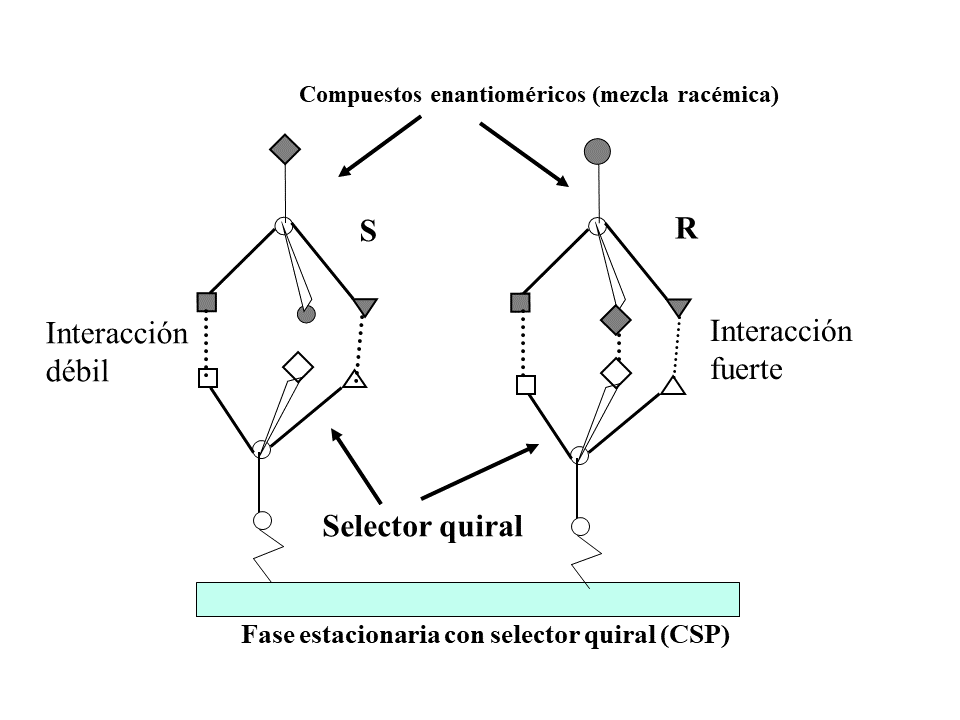
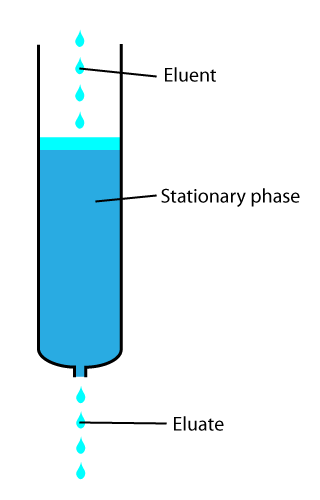
Its core ability is differential retention: molecules cling to a fixed stationary phase with varying strength while a flowing mobile phase drags them along, so each component elutes at a distinct time. That single principle lets one run resolve dozens of compounds from a single sample.
Who are Chromatography's key allies?
Archer John Porter Martin and Richard Laurence Millington Synge are the two figures most credited with transforming the technique in the 1940s through their gas-liquid partition work. Their contributions earned them the 1952 Nobel Prize in Chemistry and locked chromatography in as a cornerstone of analytical science.
What are Chromatography's different forms?
The 'character' appears in many variants—paper, gas, liquid, and thin-layer chromatography—each tuned to a different sample type or detection need. It can also play a preparative role (collecting purified fractions) or an analytical one (quantifying how much of each analyte is present).
Why is Chromatography important?
Without it, modern pharmaceuticals, environmental monitoring, and forensic labs would lack a reliable way to identify and quantify individual compounds inside complex mixtures. Its separation principles underpin virtually every modern analytical workflow in chemistry and biochemistry.
More in Chemical Analysis And Spectroscopy 1-18
Spotted an error? Know more?
This is a living reference — every entry is fact-audited, and reader corrections feed straight into our audit queue. Suggest an edit · See this site's audit record