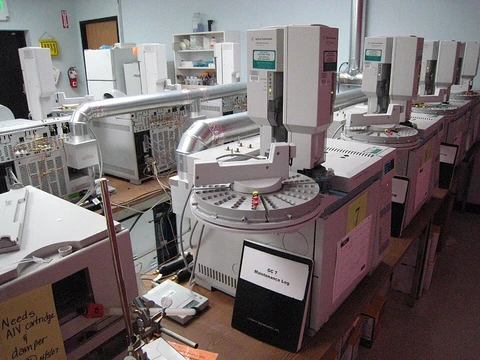
Calorimetry
Science of measuring heat transfer in chemical and physical changes.

Calorimetry is the science or act of measuring changes in state variables of a body to derive the heat transfer associated with changes of its state, such as chemical reactions, physical changes, or phase transitions. It is performed with a calorimeter. The Scottish physician and scientist Joseph Black, who first recognized the distinction between heat and temperature, is considered the founder of the science of calorimetry.
- field
- Chemistry and thermodynamics
- known_for
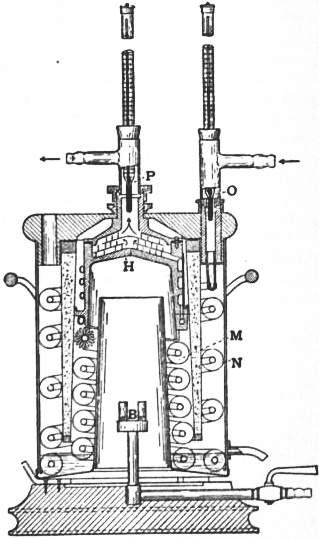
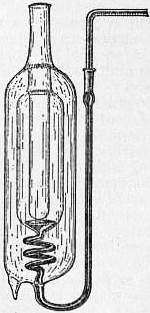
- Measuring heat transfer; founding by Joseph Black; development of ice-calorimeter by Lavoisier and de la Place; bomb calorimeter by Berthelot; differential scanning calorimeter
- key_instruments
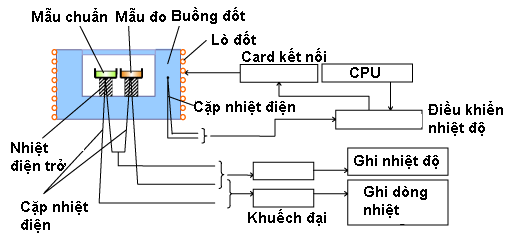
- Ice-calorimeter, bomb calorimeter, differential scanning calorimeter
Lore & Background
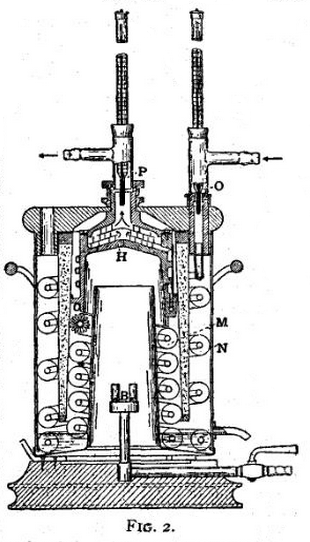
In the Graeco-Roman era, Plato and Aristotle regarded heat as a manifestation of fire. Newton proposed it was transmitted by vibrations of aether particles, while Descartes described it as accelerated motion of air particles. Robert Hooke viewed heat as a property of matter arising from motion of its parts. For centuries, the prevailing theory imagined heat as a self-repelling, weightless fluid called 'caloric'. The measurement of heat began about three centuries ago. Sir Benjamin Thompson in the 1790s, observing heat generated during cannon boring under water, concluded heat must be a form of energy. James Prescott Joule in the 1840s determined the mechanical equivalent of heat. Pierre Eugène Berthelot in the 1870s developed the first modern bomb calorimeter and introduced the concepts of endothermic and exothermic reactions.
Reader's Guide
Calorimetry is fundamental to chemistry and thermodynamics, providing the means to quantify heat transfer in chemical reactions, physical changes, and phase transitions. Its development from early philosophical ideas about heat to precise measurement instruments marks a key progression in scientific understanding. Joseph Black's distinction between heat and temperature, and his discovery of latent and specific heat, laid the groundwork. The ice-calorimeter of Lavoisier and de la Place enabled the first quantitative measurements, linking respiration to combustion. Later advances, such as Joule's mechanical equivalent of heat and Hess's law, solidified the theoretical framework. The bomb calorimeter of Berthelot and modern differential scanning calorimeters allow precise thermal analysis of small samples. Indirect calorimetry, measuring oxygen consumption and carbon dioxide production, is used to estimate heat production in living organisms. The field continues to evolve, with some recent publications questioning aspects of calorie-metabolism theory. Calorimetry remains essential in fields from chemistry and biology to materials science and engineering.
Did You Know?
- Joseph Black is considered the founder of the science of calorimetry.
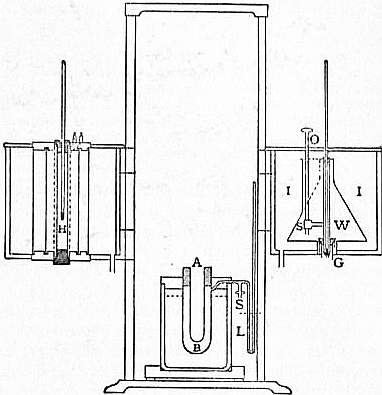
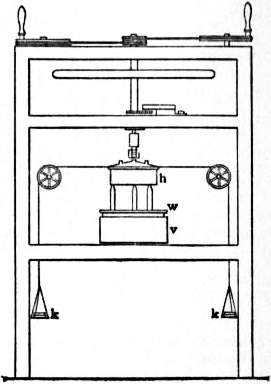
- James Prescott Joule determined the mechanical equivalent of heat in the 1840s using falling weights to drive a paddle in an insulated liquid.
- Pierre Eugène Berthelot developed the first modern bomb calorimeter in the 1870s.
Gallery
Frequently Asked Questions
Who is Calorimetry?
Calorimetry is the branch of chemistry and thermodynamics devoted to quantifying how much thermal energy moves into or out of a system during reactions, phase changes, or other state transitions. It carries out its work through specialized instruments known as calorimeters.
What are Calorimetry's powers and role?
Its core ability is tracking changes in the state variables of a body in order to calculate the exact amount of heat transferred. This makes it indispensable for studying chemical reactions, physical transformations, and phase transitions alike.
Who is the founder behind Calorimetry?
The Scottish physician and scientist Joseph Black is credited as the originator of the field, having been the first to clearly distinguish between heat and temperature. His foundational insight set the stage for everything that followed in thermal measurement.
What key instruments does Calorimetry wield?
Its most notable tools include the ice-calorimeter developed by Lavoisier and de la Place, the bomb calorimeter created by Berthelot, and the differential scanning calorimeter. Each serves a distinct purpose in capturing thermal data under different experimental conditions.
Why is Calorimetry important?
It provides the quantitative backbone for understanding energy flow in both chemical and physical processes. Without it, researchers could not reliably measure the thermal signatures of reactions or material transitions.
More in Chemical Analysis And Spectroscopy 1-18
Spotted an error? Know more?
This is a living reference — every entry is fact-audited, and reader corrections feed straight into our audit queue. Suggest an edit · See this site's audit record