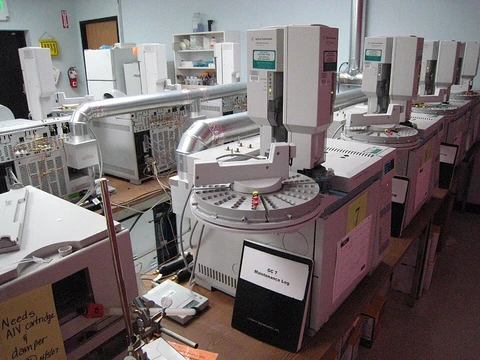
Atomic spectroscopy
Study of electromagnetic radiation absorbed and emitted by atoms.

MarsInSVG · CC BY 4.0
Atomic spectroscopy is the study of the electromagnetic radiation absorbed and emitted by atoms. It is applied for determination of elemental compositions because unique elements have unique emission spectra.
- field
- Physics
- subfield
- Atomic spectroscopy
- key_divisions
- Optical spectroscopy and mass spectrometry
- common_source
- Flames
- common_instrument
- Atomic absorption spectrometers
Lore & Background
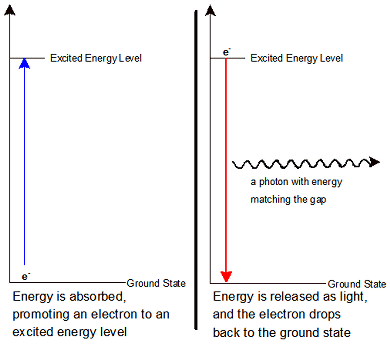
Atomic spectroscopy is based on the quantized nature of atomic orbitals. Electrons exist in defined energy levels and move between them by absorbing or emitting energy equal to the difference between those levels. In optical spectroscopy, this energy is in the form of photons. Because each element has a unique number of electrons, the pattern of absorbed or emitted photons is unique to that element, allowing identification and quantification of atoms in a sample. The field is divided into atomic absorption spectroscopy and atomic emission spectroscopy. In absorption spectroscopy, light of a predetermined wavelength is passed through atoms; if the wavelength corresponds to an energy level difference, light is absorbed. The absorbance value, related to concentration via the Beer–Lambert law, is used to determine elemental concentration. In emission spectroscopy, the intensity of emitted light is directly proportional to the concentration of atoms. Sources for atomization include flames, inductively-coupled plasmas, graphite furnaces, lasers, and others. Flames are most common due to low cost and simplicity. Inductively-coupled plasmas, especially with mass spectrometers, offer outstanding analytical performance but are more complex and expensive. Mass spectrometry generally provides better analytical performance but is more complex, costly, and requires more training.
Reader's Guide
Atomic spectroscopy is a fundamental analytical technique in physics and chemistry, enabling the identification and quantification of elements in a sample. Its significance lies in the direct application of quantum mechanics: the quantized energy levels of electrons produce unique spectral fingerprints for each element. This allows scientists to determine elemental composition in fields ranging from environmental monitoring to materials science. The technique is divided into optical and mass spectrometry, with optical methods being far more common due to lower cost and adequate performance for many tasks. Atomic absorption spectrometers are among the most commonly sold and used analytical devices. The choice of atomization source—such as flames, plasmas, or graphite furnaces—depends on the sample type and required sensitivity. While mass spectrometry offers superior performance, its complexity and cost limit its use to applications where high sensitivity is critical. The Beer–Lambert law provides a quantitative relationship between absorbance and concentration in absorption spectroscopy. Overall, atomic spectroscopy remains a cornerstone of elemental analysis, balancing cost, simplicity, and performance.
Did You Know?
- Atomic spectroscopy can be divided by atomization source or by the type of spectroscopy used.
- Mass spectrometry generally provides significantly better analytical performance but is also significantly more complex.
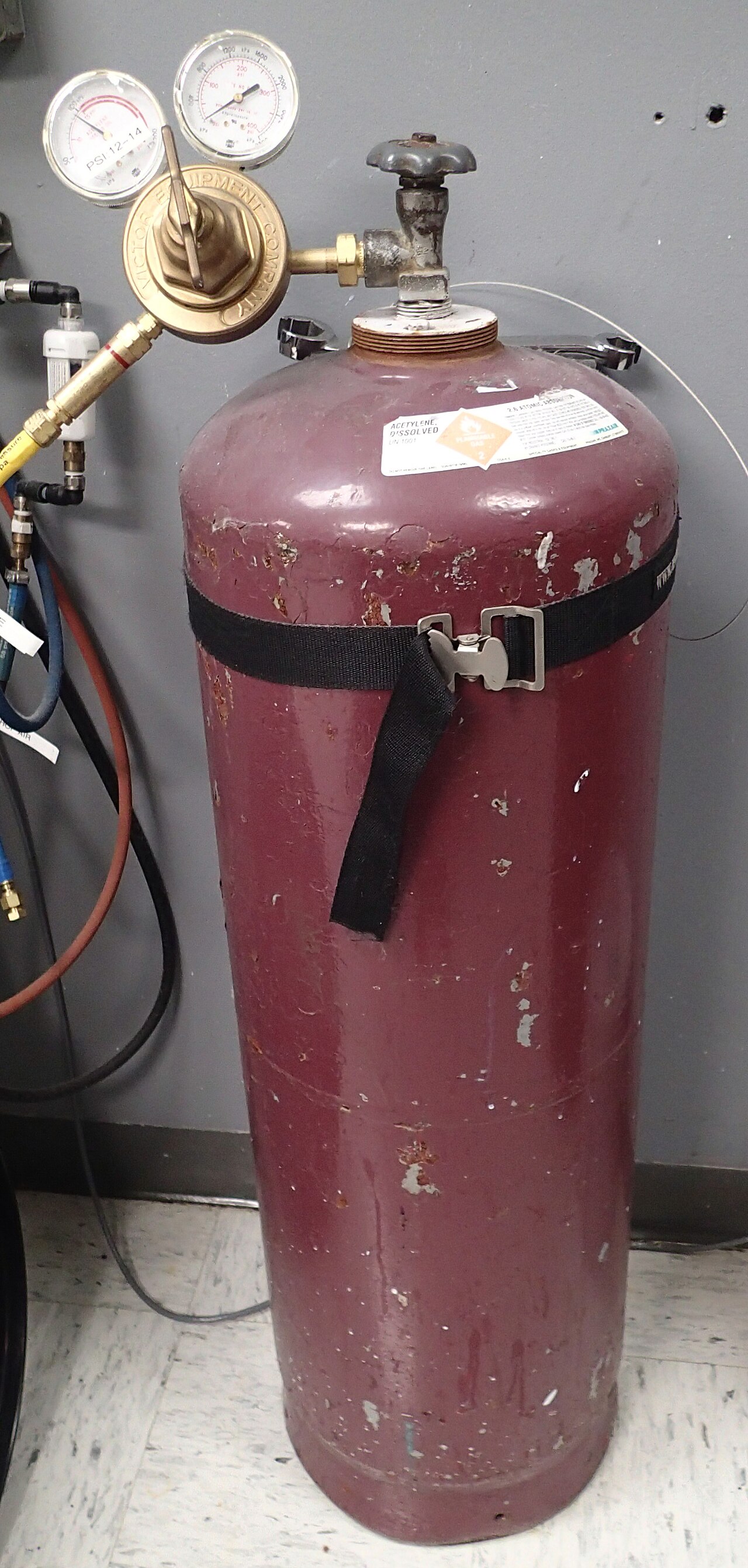
- Flames are the most common atomization source due to their low cost and simplicity.
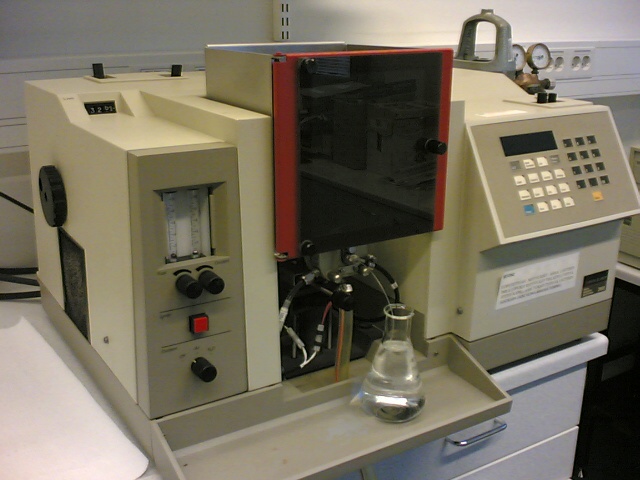
- Atomic absorption spectrometers are one of the most commonly sold and used analytical devices.
The Core Principle of Atomic Absorption
Atomic absorption spectroscopy is an elemental analysis technique designed to measure the concentration of specific metals within a sample. Its operating principle rests on a deceptively simple physical phenomenon: when metals in a sample are vaporized by exposure to a flame, the resulting atoms sit predominantly in their ground state. In this state, each metallic element will absorb light radiation at a wavelength that is unique to its identity, promoting the atom to an excited state. Because no two elements share the same absorption wavelength, every metal effectively carries its own spectral fingerprint. Crucially, the total amount of radiation absorbed at a given wavelength scales directly with the number of atoms of that element present in the sample. By quantifying this proportional relationship between absorbed light and atomic density, analysts can calculate the exact concentration of a target metal. This straightforward link between a measurable optical signal and a physical quantity is what makes AAS a powerful and widely adopted tool in chemical analysis.
The Walsh Revolution and the Problem It Solved
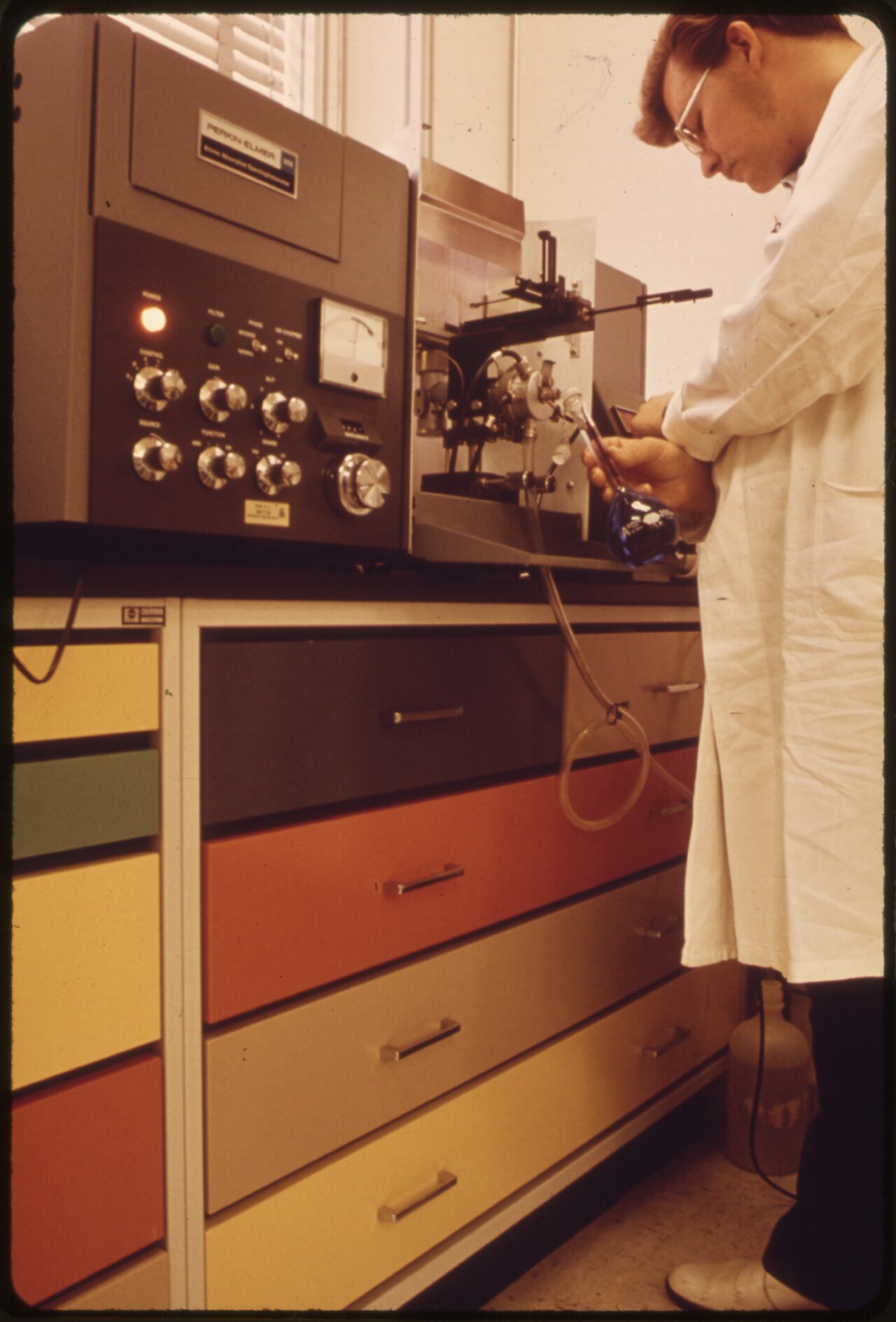
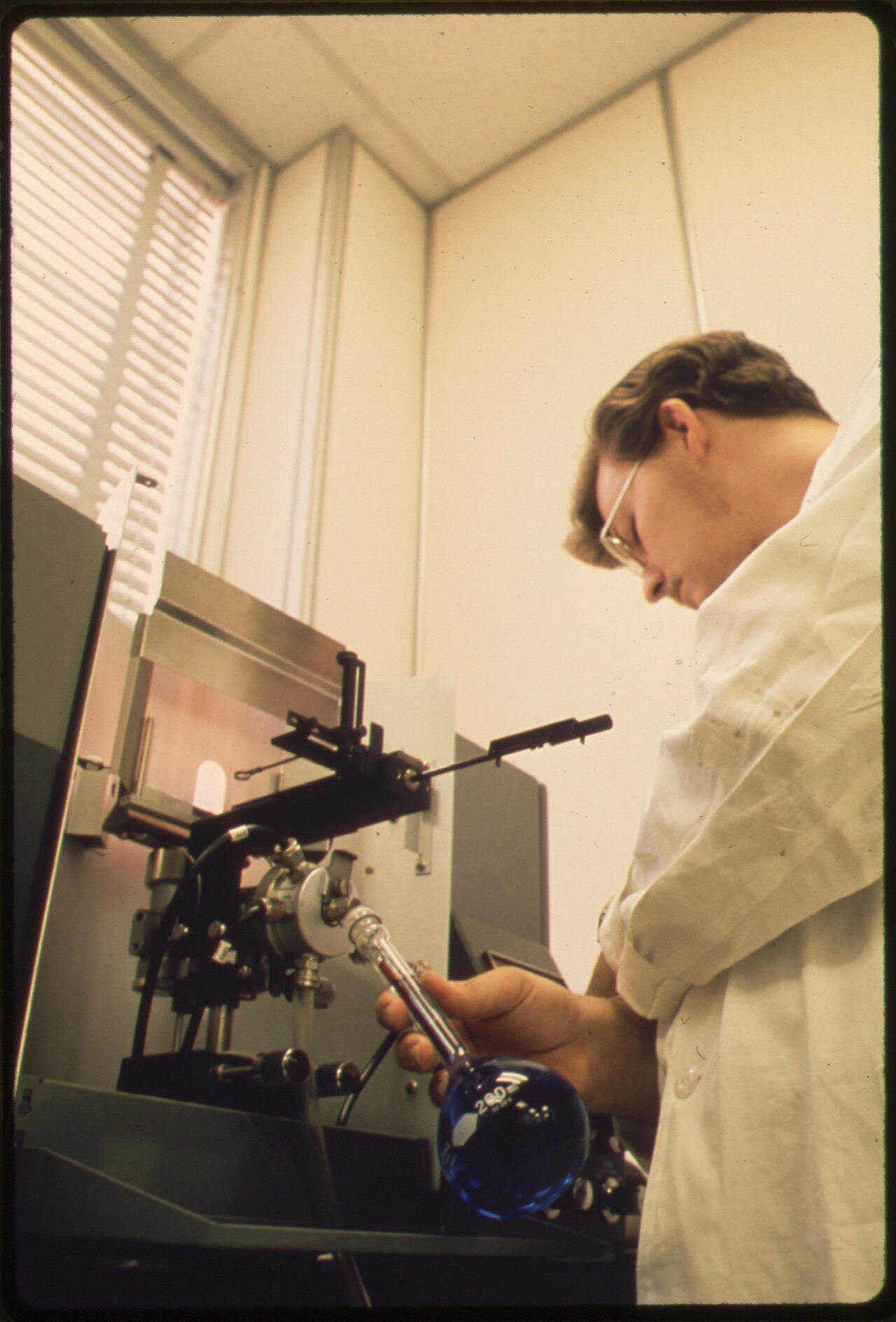
During the 1950s, a team of Australian chemists working under Sir Alan Walsh at the Commonwealth Scientific and Industrial Research Organisation in Melbourne developed what would become the modern form of atomic absorption spectroscopy. He proposed that an absorptive approach would yield far more precise results than the emissive spectroscopy methods then in use. Robinson had highlighted a key practical advantage: AAS is largely immune to environmental interference from other elements in the experimental space. This was a decisive improvement over flame photometry, the dominant technique before AAS, which produced wildly variable results because it was sensitive to airborne elements, flame temperature fluctuations, and solvent composition. AAS sidesteps these problems almost entirely because it depends on the physical interactions of atoms that are overwhelmingly in the ground state, rather than on the minority of excited-state atoms that flame photometry relies upon.
Engineering the Light: Radiation Sources in the Spectrometer
The radiation source is one of the two most critical components in an atomic absorption spectrometer, responsible for exciting the atoms in the sample. The most common source is the hollow cathode lamp, a sealed vessel filled with low-pressure inert gas containing a hollow cup cathode made of the target metal and a tungsten wire anode. When high voltage is applied, the gas ionizes, ions accelerate toward the cathode, and collisions sputter metal atoms that become excited and emit element-specific wavelengths. Single-element lamps deliver the highest precision and stability, while multi-element lamps offer convenience at the cost of reduced sensitivity and the risk of spectral interference. For volatile metals like arsenic or lower-sensitivity elements like antimony, electrodeless discharge lamps are preferred: a small amount of metal is sealed in an evacuated quartz tube with argon, then excited into a plasma state inside a microwave discharge cavity. These lamps require a separate power supply and longer stabilization times.
A New Era: High-Resolution Line Continuum AAS
For nearly five decades after its inception, atomic absorption spectroscopy operated within a set of well-understood but persistent limitations, particularly around the accuracy of background measurement and correction. In the early 2000s, a new variant called high-resolution line continuum AAS emerged and was widely regarded as a revolutionary advance in the field. HS LC AAS addressed the very issues that had constrained earlier instruments, most notably the difficulty of obtaining reliable background readings and applying accurate corrections to the measured signal. Around the same period, the first commercially available HS LC AAS instrument reached the market, making the technology accessible beyond research laboratories. The underlying distinction between line-source and continuum-source AAS is central to understanding this evolution. In traditional line-source AAS, the narrow emission line of the radiation source itself provides the high resolution needed for measurement, and the monochromator's job is to separate the analytical line from other radiation the lamp emits. Continuum-source approaches, by contrast, rely on a broadband lamp and a high-resolution monochromator to isolate the specific wavelength of interest, a design philosophy that HS LC AAS refined to overcome the background-correction challenges that had long plagued the technique.
Gallery

Frequently Asked Questions
Who is Atomic spectroscopy?
Atomic spectroscopy is a subfield of physics dedicated to studying the electromagnetic radiation that atoms absorb and emit. It occupies a central place within the broader discipline of chemical analysis and spectroscopy.
What are Atomic spectroscopy's powers/role?
Its signature ability is determining elemental composition, because every element produces a distinct emission spectrum that acts like a unique fingerprint. This makes it the go-to technique for identifying which elements are present in an unknown sample.
What are Atomic spectroscopy's key divisions?
The field splits into two major branches: optical spectroscopy and mass spectrometry. Together they cover the full range of methods used to probe radiation at the atomic level.
Why is Atomic spectroscopy important?
Because each element carries a distinct spectral signature, atomic spectroscopy lets analysts pinpoint exactly which elements are in a given sample. That reliability is what makes it indispensable across chemistry, environmental monitoring, and materials research.
What tools and sources does Atomic spectroscopy rely on?
A widely used instrument in the field is the atomic absorption spectrometer, while flames serve as a common radiation source for exciting atoms. These practical setups keep the technique accessible in many routine laboratory settings.
More in Chemical Analysis And Spectroscopy 1-18
Spotted an error? Know more?
This is a living reference — every entry is fact-audited, and reader corrections feed straight into our audit queue. Suggest an edit · See this site's audit record